What's A Kick?
The kick drum is the core element of four-on-the-floor and modern bass-driven production. It sets the pulse, and everything else dances around it. Let’s get into it.

Finger Kickin' Good
A kick drum. What is it, really?
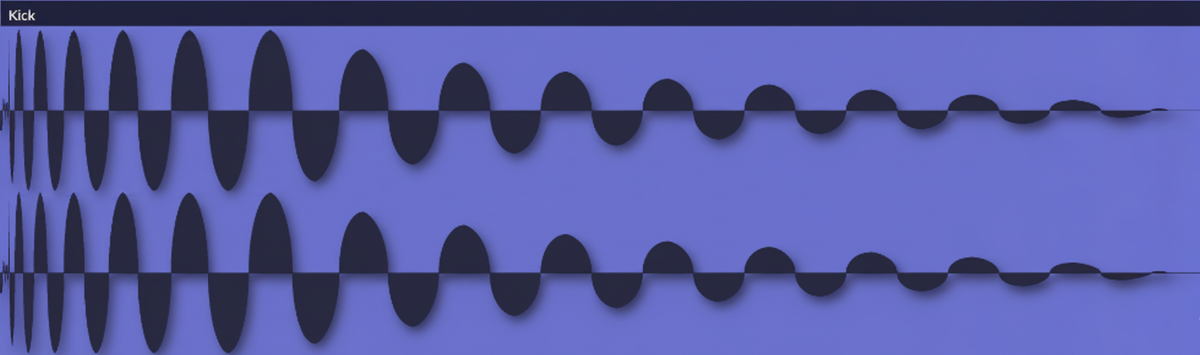
At its simplest, it's a low-end thump, the pulse beneath everything. But that thump can take many forms: a clean, transient-driven sub hit; a resonant thud with tone and decay; or a carefully sculpted hybrid of both.
While some genres rely on the air and wood of an acoustic kit, the story of the modern dance kick is overwhelmingly synthetic. And that story doesn’t begin on a dance floor in America: it begins in the design labs of Japan.
Machines like the Roland TR-808 and TR-909 redefined rhythm, turning electrical impulses into emotion. Ironically, they were born from a failed attempt to replicate a real drum kit. Their failed attempt at emulation was not without charm. Those unique, synthetic timbres have since imprinted themselves so deeply onto music that they've become a fundamental part of what 'sounds right' to us.
Most of what we call dance kicks trace back to those machines and their descendants. The TR-909 reigns supreme, with honorable mentions to the DX, DMX, and LinnDrum. The 909’s kick has a clicky, punchy tone, while the 808’s is rounder and longer, with its tail often carrying the deepest frequencies in a track.
Why It Matters
As the heartbeat of your track, the kick is fundamental. The length of its tail, the sub-frequency it occupies, and the way it decays directly shape and often dictate your bassline.
This is why producers obsess over kick design. A long, subby tail might lock perfectly with a one-note bass groove. A shorter, tighter hit leaves space for melodic movement. Either way, the interplay between kick and bass is the foundation of dance music.
The Aesthetic Now
These days, the aesthetic often leans on the kick's tail dropping squarely into sub territory. This is what gives a track its physical weight, its pulse, and its hypnotic drive on a club sound system.
The point is simple: get the kick right, and everything else falls into place.
Next up: How to Kick — a practical guide to shaping and tuning your own.